

Key Takeaways
- Tools for managing all types of diabetes, thyroid, and hormonal disorders enable accurate diagnosis, timely intervention, and better outcomes.
- Customizable templates, lab integrations, and decision support systems reduce errors and support complex case management.
- Secure communication tools and compliance features strengthen patient engagement, confidentiality, and trust while optimizing practice operations.
Endocrinology is a specialized field that studies and treats hormone disorders, diabetes, thyroid conditions, and other metabolic issues. According to the American Thyroid Association, approximately 20 million Americans have thyroid disease. As such, having the right tools to manage patient data is crucial for endocrinologists.
Endocrinology EHR software can simplify and streamline many everyday tasks. However, not all EHR systems are created equal. When choosing an EHR for an endocrinology practice, it’s essential to consider certain features that cater to this specialty's needs. Here are some of the most important features every endocrinology practice should look for in its EHR system.
1. Comprehensive Diabetes Management Tools
One of the biggest aspects of endocrinology is diabetes management, whether it’s Type 1 or Type 2 diabetes. Having an EHR that’s specifically designed to manage diabetes is crucial.
A well-built Diabetes management EHR must offer features like tracking blood sugar levels, insulin doses, and HbA1c results.
CGM (Continuous Glucose Monitor) Integration
Devices like Dexcom G7 and Abbott FreeStyle Libre generate thousands of glucose readings per patient per month. An endocrinology EHR that can ingest, display, and annotate CGM data directly in the patient chart gives the endocrinologist a complete clinical picture — not just values reported at the visit.
Insulin Pump Upload Compatibility
Insulin pump systems like Medtronic, Omnipod, and Tandem device uploads allow physicians to directly upload the insulin pump data into the EHR system. Doctors review settings and delivery patterns to make more accurate personalized treatment plans.
Diabetes management EHR automatically surfaces the patient’s last 6 months of medical data. A physicist is not required to manually query historical records. This longitudinal view allows pattern identification rather than reactive single-point responses.
2. Thyroid Patient Tracking
Endocrinologists often treat patients with thyroid disorders, such as hypothyroidism or hyperthyroidism. A Thyroid patient tracking EHR feature helps endocrinologists stay on top of these critical measurements. With the Thyroid patient tracking EHR, the doctor can quickly compare the patient’s previous test results and symptoms, helping them determine the best course of action.
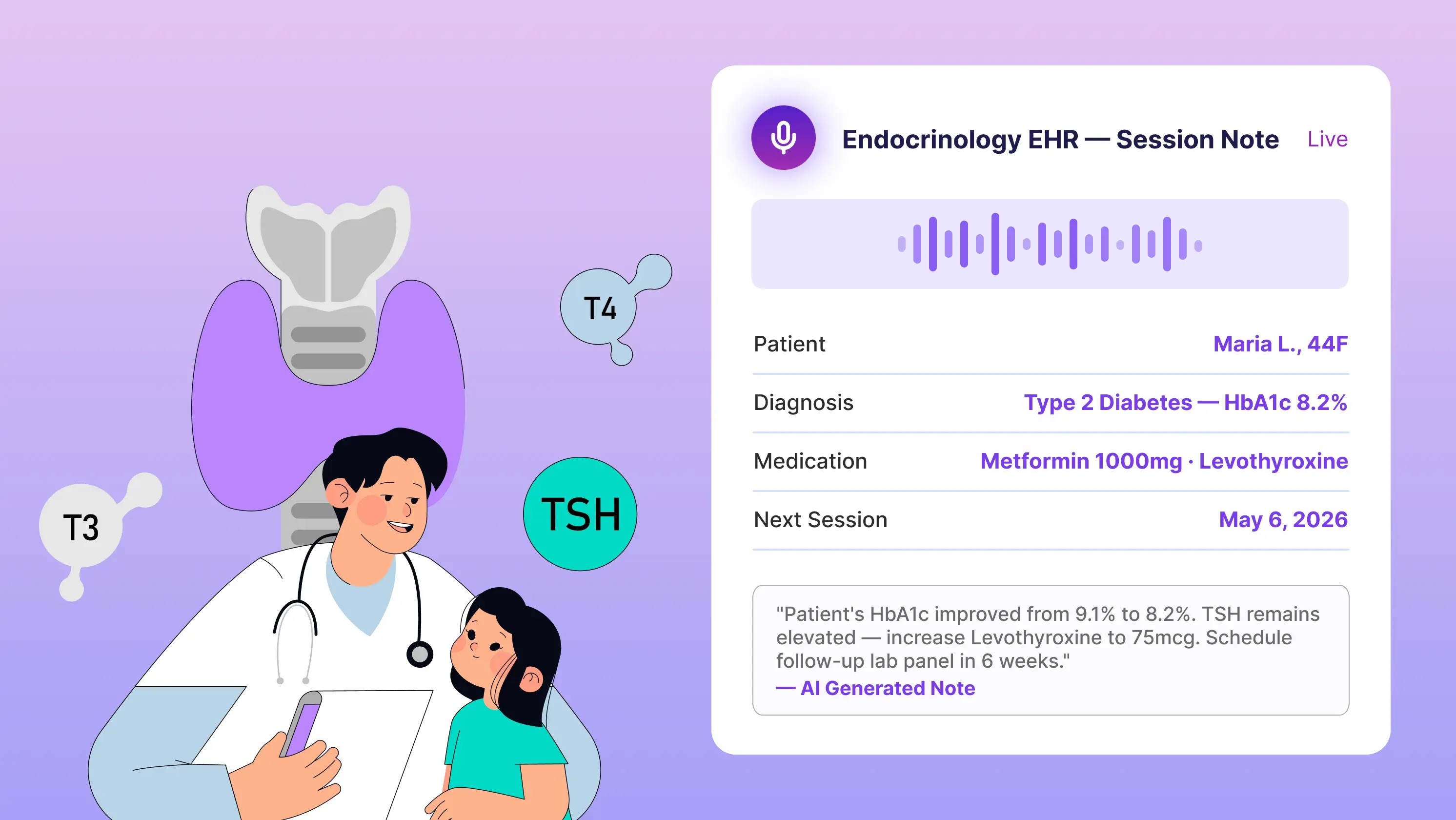
In a modern endocrinology practice in this fast-paced medical industry, a good EHR system must be able to track thyroid function tests, including TSH (Thyroid Stimulating Hormone), T3, and T4 levels. The data generated by this EHR should be easily accessible to practitioners to ensure patients are receiving the appropriate treatment over time.
Moreover, the EHR should allow for tracking any changes in symptoms, such as weight change, fatigue, or mood swings, which are usually the biggest indicators of a change in thyroid function.
3. Hormone Disorder Management
Endocrinologists also have to manage a variety of hormone disorders, such as adrenal insufficiency, polycystic ovary syndrome (PCOS), or growth hormone deficiencies. A dedicated feature for EHR for hormone disorders helps manage these conditions in a more structured way.
A good hormone disorder management feature will allow practitioners to document symptoms and track the patients’ hormone levels over time to assess the patient's condition and manage medication schedules.
Another feature that can be the icing on the cake is if the hormone disorder management system offers decision support, providing alerts if certain hormone levels fall out of the normal range, so doctors can address the issue before any complications.
4. Customizable Templates and Patient Histories
In endocrinology, patients have distinct medical records and treatment plans. That's why specialty-specific templates are so important. Templates designed for specific health problems can save a physician’s time. These templates also help maintain consistency across patient charts by allowing for quicker data entry.
For instance, an endocrinologist might use a template for diabetic patients that includes fields for tracking insulin dosages, glucose levels, and other essential data. Customization doesn’t stop there; it can also apply to a patient’s history, capturing significant details like family history of thyroid issues, diabetes, or other metabolic disorders. This approach helps streamline the process and provides a complete picture of each patient’s health.
5. AI Ambient Documentation for Complex Encounters
Endocrinology is one of the most documentation-intensive branches of internal medicine. A standard follow-up includes reviewing CGM data, assessing risks, and adjusting insulin regimes. It also updates the medication list and coordinates with other specialists in the practice.
AI ambient scribes address this directly. The system listens to the patient-physician conversation and generates a structured clinical note automatically, populated with the correct clinical fields for the encounter type. The physician reviews and signs the draft rather than building the document from scratch.
A 2025 research published by NEJM Catalyst shows that ambuinet AI scripts can save 15,791 hours of physicians’ documentation time. It also improved patient communication by 84% as a result.
For endocrinology specifically, the AI layer should support endocrine-specific note structures, CGM pattern interpretation, hormone level trend narratives — not generic SOAP formats that require significant manual editing. Native write-back to EHR fields is the critical technical requirement. A scribe who produces a document for manual copy-paste retains most of the documentation burden it was supposed to eliminate.
6. Decision Support for Complex Cases
Endocrinology involves conditions that require close examination and careful decision-making. An in-built decision support system in an EHR system can also guide physicians through challenging medical cases. For instance, EHR systems can also offer evidence-based recommendations for managing difficult cases.
7. MIPS and Quality Reporting for Endocrinology
Endocrinologists who choose Medicare must report the quality measures mentioned by the Merit-based Incentive Payment System (MIPS). Key quality measures include:
- Diabetes: Hemoglobin A1c Poor Control (NQF 0059)
- Preventive Care and Screening: Body Mass Index
- Diabetes: Eye Exam and Foot Exam documentation
According to the American College of Emergency Physicians, failure to participate and report to MIPS could result in 9% reduction of Medicare reimbursements.
An endocrinology EHR with a built-in MIPS dashboard tracks performance in real time. It generates CMS document attestation automatically and flags the patient names with failure thresholds. It eventually shifts the operations from reconciliation excuse to automated monitoring functions.
8. Data Security and Compliance
A patient’s medical records are considered the most sensitive data in healthcare, so security and compliance should be the top priority for any medical practice. The EHR system you consider must be HIPAA compliant and safe from breaches.
Make sure to look for features like data encryption, two-factor authentication, and secured access controls. The features ensure that only authorized individuals can access data nd that too with the organization’s permission.
Conclusion
Choosing the right EHR for your endocrinology practice isn’t just about improving practices — it’s about giving your patients the best care possible. The right software can make managing diabetes, tracking thyroid conditions, and handling hormone disorders much easier. Features like decision support and specialized templates ensure that you can focus on what matters most: your patients.
At Practice EHR, we get that endocrinology is unique. That’s why our software includes all the tools you need for better diabetes management, thyroid tracking, and hormone disorder care. It’s designed to help you work smarter, offering patients the most effective treatments and getting the best results.
FAQ's

.svg)
