

Key Takeaways
- Telemedicine in urgent care settings makes patient triage more efficient and faster.
- Urgent care telemedicine offers numerous benefits to physicians and patients.
- Telemedicine eliminates the need for in-person visits and related expenses.
The COVID-19 pandemic reached its peak in 2020. The subsequent circumstances further fueled the need for virtual visits. As a result, urgent care telehealth visits increased by 683%. It has since become an emerging trend in healthcare. This shows that the benefits of telemedicine can help maintain urgent care delivery in emergency situations.

In the modern healthcare system, telemedicine is no longer just a nice-to-have but a necessity for urgent care. For medical practices, telemedicine has become a clinical tool that makes urgent care more accessible and effective.
This blog examines why telemedicine has become a vital clinical tool for urgent care and the benefits it offers to urgent care clinicians.
Why is Telemedicine Important in Urgent Care?
In most urgent care settings without telemedicine, all patients must be triaged upon arrival. Such an in-clinic triage process requires a staff 24/7 to take vital signs, medical history, and decide urgency manually. It creates bottlenecks not only for the physicians but for the entire practice.
A study on how telemedicine improves triage was published in the Journal of the American Association of Nurse Practitioners. It revealed that telemedicine in the urgent care setting can make triage efficient and faster. It leads to less waiting time and more patient satisfaction. Urgent care telemedicine assists in assigning patients quickly to the right level of care.
Urgent care telemedicine benefits a diverse group of people, which mainly includes:
- People in rural areas or with less mobility
- Busy professionals and parents needing quick advice
- Individuals avoiding public spaces for health reasons
- Patients needing quick advice for common health issues like flu, cold, or minor rashes.
Benefits of Telemedicine for Urgent Care
Urgent care telemedicine offers numerous benefits to physicians and patients. This can enhance their overall experience at healthcare facilities. Here are some key benefits urgent care physicians can avail:
1. Faster and More Efficient Triage
You must have observed that during evenings and weekends, urgent care centres operate with minimal staff. Patients often have to wait for long hours to receive treatment for non-life-threatening concerns, such as colds, flu, and rashes. The long queues and waiting times not only lead to patient dissatisfaction but also to physician burnout.
Now, imagine if telemedicine were integrated into the urgent care practices, you could handle visits virtually anywhere, anytime. This would not only improve response time and reduce staff burden but would also ensure that patients receive prompt care at any time of the day.
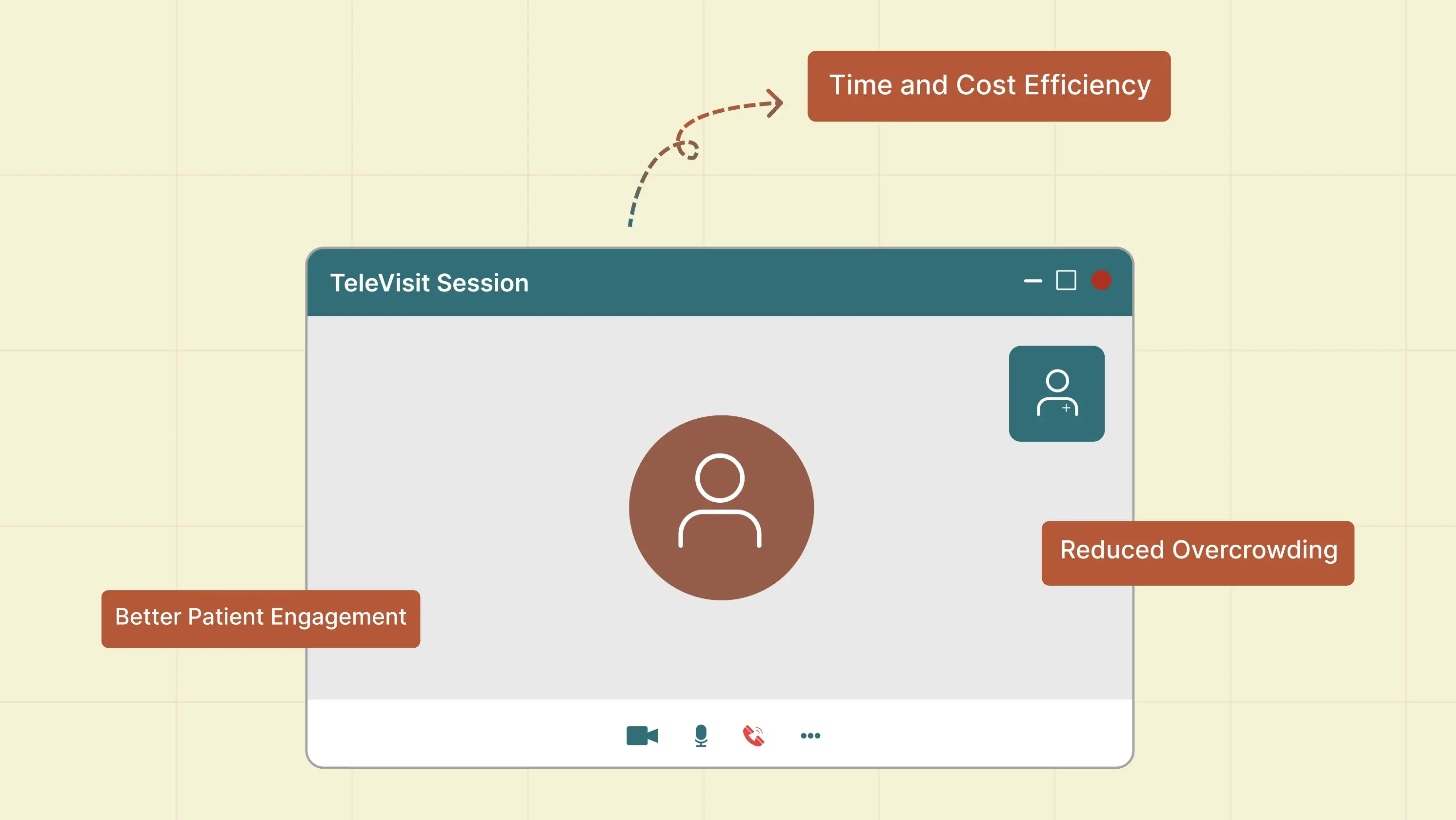
2. Time and Cost Efficiency
Telemedicine for urgent care centres has become crucial, especially in rural settings. Physicians covering rural or remote areas face heavier workloads without telemedicine. They have to handle all patients in person, increasing time and money spent on travelling, scheduling, and follow-ups.
A study published in the International Journal of Medical Informatics revealed that integrating telemedicine into the practice can help redistribute workload and alleviate physician burnout. It has also been shown to reduce travel time and cost for patients.
Telemedicine eliminates the need for in-person visits and spending on related expenses, saving time and money!
3. Reduced Overcrowding and Resource Burden
Physicians often face increased overcrowding and resource burden without reliable telemedicine options. Without virtual management, you often have to handle all sorts of non-urgent cases as well, leaving urgent medical cases untreated.
Telemedicine drastically overcomes the overcrowding in the urgent care centres by diverting non-urgent cases. By handling normal medical concerns virtually, physicians can focus on more serious cases in person. Thus, telemedicine will help you balance patient loads more efficiently,
4. Control of Infectious Diseases
In urgent care centres, physicians have to see all patients in person, causing overcrowded waiting rooms. This would eventually increase the risk of spreading infectious diseases among already sick patients.
Telemedicine was established to avoid such situations in the first place. During the COVID-19 pandemic, this controlled the transmission of diseases and strained clinic resources.
Integrating telemedicine into urgent care drastically reduces unnecessary visits and minimizes the contact that can spread the infection. A recent research on the effectiveness of telemedicine has revealed that telehealth visits are directly linked with reduced infection risk.
5. Better Patient Engagement
In-person visits in urgent care centres make it difficult for the physicians to give equal time to all patients. Lower patient engagement and dissatisfaction become the usual outcomes of long waiting times and limited accessibility. Moreover, research shows that patients are also less likely to return for follow-ups because it is costly and less convenient.
On the contrary, remote visits make it easier for patients to seek help at any time of the day. It also helps the patients to follow up regularly and take charge of their own healthcare journey.

Common Health Issues Managed via Telemedicine in Urgent Care
Some of the most common health concerns reported at urgent care centres, which can be initially managed through telemedicine, are as follows:
1. Respiratory and Infection-Related Conditions
Common respiratory concerns, such as colds, flu, sinus infections, sore throats, bronchitis, and COVID-19 symptoms, can be initially managed through telemedicine.
2. Allergies and Asthma
Seasonal allergies, allergic reactions, and asthma flare-ups can be evaluated and managed initially via video visits.
3. Skin and Eye Issues
Rashes, eczema, insect bites, mild skin infections, pink eye (conjunctivitis), and minor irritations can often be evaluated and diagnosed online.
4. Urinary and Digestive Concerns
Urinary tract infections (UTIs), bladder infections, upset stomach, nausea, diarrhea, and other mild gastrointestinal symptoms
Empower Your Urgent Care Practice with Telemedicine
Telemedicine is no longer an option or an elective but a requirement of the evolving medical industry. With virtual consultations for non-urgent medical concerns, you can spare more time for in-person urgent cases.
Strong EHR platforms are crucial in maintaining the quality of healthcare delivery through telemedicine. Practice EHR stands out as one of the most reliable EHRs in the market that can help you in conducting safe and secure virtual consultations with your patients.
Request a free demo today to learn about our all-in-one EHR, practice management, and RCM platform!
FAQs

.svg)
