

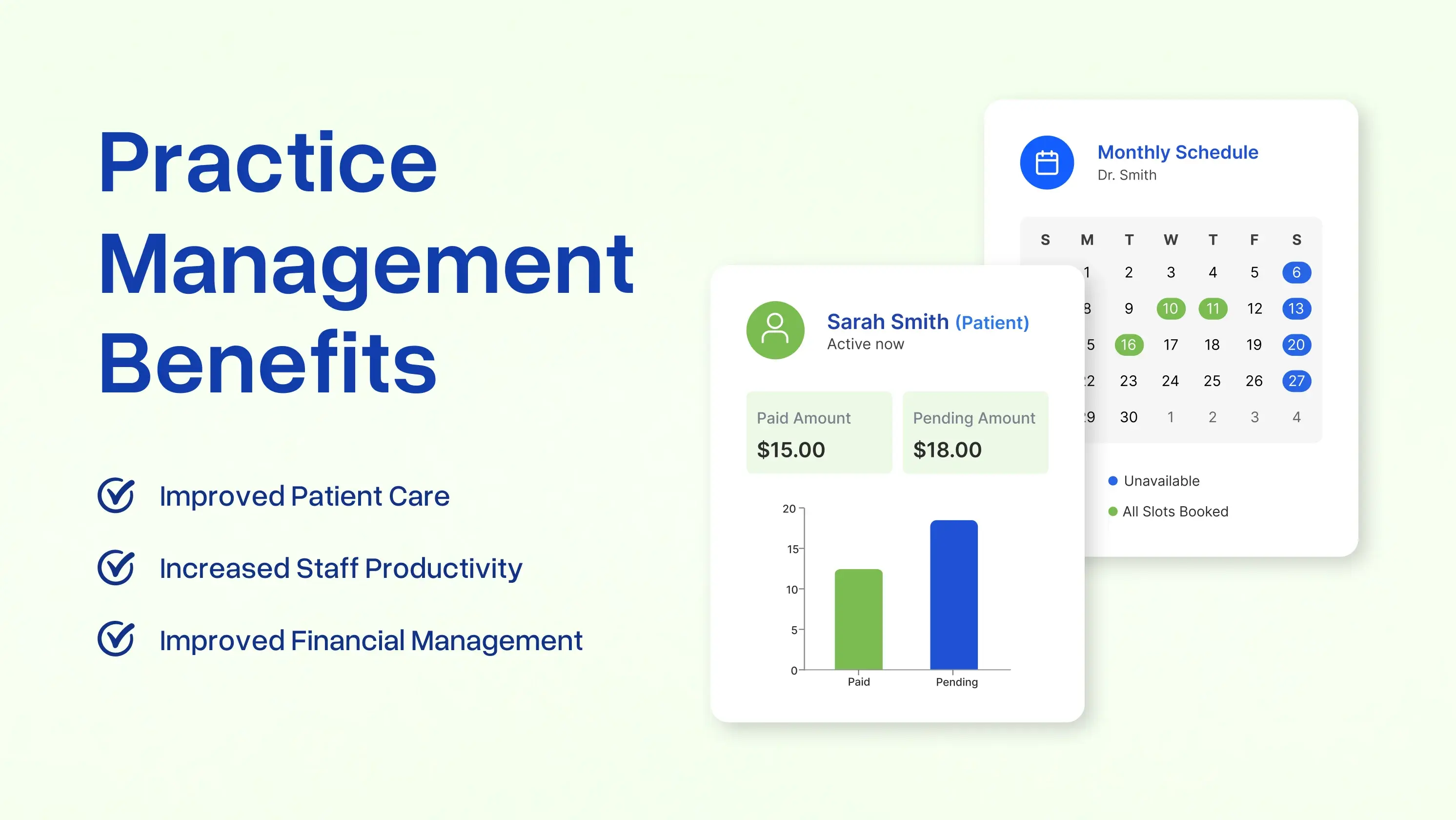
Let's face it, running a medical practice is no easy feat. There are a million things to keep track of, from patient records and billing to insurance forms and scheduling. It definitely takes a village to keep everything running smoothly. But why use an entire village when you can use practice management software?
Practice management software is a comprehensive solution that can help you manage every aspect of your practice, from the front desk to the back office. A solid clinic management system will be the difference between a successful practice and one that quickly becomes overwhelmed. It's what will help you manage your finances, from billing and collections to insurance claims. And it's also what will help you manage your patients, from scheduling and reminders to follow-up care.

What really matters is the care you provide your patients. But in order to do that, you need the very best patient management system that will help you handle the business side of things so you can focus on bigger and better things.
In this article, we dive into the five ways a practice management system can help your practice succeed.
1. Improved Patient Care
The all-important bottom line for any medical practice is patient care. That's what you're in business to do, after all. And while you may have the best intentions when it comes to providing care, sometimes things can fall through the cracks. Appointments get double-booked, patients get lost in the shuffle, and crucial test results never make it to the right person.
Implementing a patient management system can lead to significant improvements in patient care. According to a study by the American Medical Association, practices that adopted electronic health records (EHRs), one type of patient management system, saw a 30% reduction in medication errors and a 27% decrease in unnecessary lab tests.
In addition, patient management systems can increase efficiency and save time for both healthcare providers and patients. A survey by the Medical Group Management Association found that practices using EHRs spent 20% less time on administrative tasks and saw a 10% increase in patient volume. Furthermore, patient management systems can improve patient satisfaction and engagement. A study by the Journal of Medical Internet Research found that patients who had access to their medical records through a patient portal were more likely to be engaged in their healthcare and had higher levels of satisfaction with the patient care they received.
By consolidating patient information into one central location, patient management systems can also reduce the risk of lost or misplaced records and improve overall data accuracy. This can lead to better clinical decision-making and improved patient outcomes.
2. Increased Staff Productivity
Your staff is the backbone of your practice. They're the ones who keep things running smoothly day in and day out. But when they're constantly bogged down with paperwork and administrative tasks, it can take away from the time they have actually to see patients.
A good practice management system can automate a lot of the tedious tasks that your staff has to do on a daily basis and streamline your entire workflow. From scheduling and reminders to billing and collections, there are several tasks that can be easily automated. Ultimately, the best practice management systems free up your staff's time and improve productivity so they can ensure your practice is reaching its full potential.

3. Improved Financial Management
In today's healthcare industry, financial management is more important than ever. In fact, according to a study by the Medical Group Management Association (MGMA), medical practices that implement best financial management practices outperform their peers by up to 15%.
One of the most critical aspects of financial management is credentialing, which is the process of verifying and validating the qualifications of doctors and other healthcare practitioners. This process involves verifying their education, training, certifications, malpractice coverage, and previous performance records. By ensuring that only qualified practitioners are credentialed, practices can reduce the risk of malpractice and increase patient safety.
In addition to credentialing, practice management systems can provide real-time insights into a practice's financial health. This means that medical practices can quickly point out problematic areas and make informed decisions about how to allocate resources. Furthermore, automation features of practice management software can help practices streamline billing and collections processes, which can reduce the amount of time and resources needed to manage these tasks. This directly leads to enhanced cashflows, in fact, practices that use automated billing and collections systems can reduce their billing costs by up to 30%, according to a study by the Healthcare Financial Management Association.
By implementing best financial management practices and utilizing practice management systems, medical practices can improve their financial health, reduce risk, and ultimately provide better patient care.
4. Improved Patient Satisfaction
As a healthcare provider, your ultimate goal is to provide the best possible care for your patients. However, there are various factors that can affect their satisfaction with your practice, such as long wait times for appointments or billing issues. This is where a practice management system can be of great help.
By using a practice management system like Practice EHR, you can provide a more seamless experience for your patients, from the moment they schedule an appointment to the moment they leave your office. This means that everything will be streamlined and efficient, resulting in fewer headaches for your patients and fewer problems for you.
Moreover, a practice management system can also assist you with the critical and essential process of credentialing. Credentialing involves the verification and validation of qualifications claimed by doctors and other healthcare practitioners, such as their education, training, certifications, and malpractice coverage, as well as their expertise and previous performance records. By ensuring that your healthcare practitioners are properly credentialed, you can provide your patients with the highest quality care possible.

5. Greater Visibility into Practice Performance
As a medical practice owner, it's essential to have a clear picture of how your practice is performing. For example, are you meeting your financial goals? Are your patients happy? Are your staff members productive? The best practice management software gives you detailed reports on every aspect of your practice. That way, you can identify areas that need improvement and make the changes necessary to keep your practice running like a well-oiled machine.
A good practice management system is an essential tool for any medical practice. If you don't have one in place, now is the time to consider investing in one. With all of the benefits it can offer, it's an investment that will pay off in the long run.
Request a Practice EHR Demo Today!
All these points and hundreds of successful practices that use Practice EHR are the evidence that The ONE Solution Practice EHR can take your practice to new heights.
If you're interested in seeing how a practice management system can benefit your practice, we invite you to request a demo of our software today. A representative from our team will be happy to show you how our system can increase efficiency, improve patient satisfaction, and help your practice succeed.
Request a Demo now and see how the Practice EHR practice management system can help your medical practice reach new heights!

.svg)
