

Key Takeaways
- A behavioral health EHR supports the unique clinical and administrative workflows of mental and behavioral health practices.
- The right EHR can improve care coordination, streamline medication management, and make important patient information easier to access.
- By bringing records, documentation, and practice workflows into one system, EHR software helps providers spend less time on administrative tasks.
Behavioral health practices have largely moved beyond paper records. According to a 2026 report from the Office of the National Coordinator for Health Information Technology (ONC), 68% of mental health and substance use treatment facilities in the U.S. reported using an EHR exclusively in 2024, with no paper charts. Another 25% reported using a combination of EHRs and paper records.
For Physicians like you who run small behavioural health practices, having an EHR is just half of the equation. From clinical documentation to medication management, the software should support the unique workflow of behavioural healthcare.
This guide will help you learn what behavioural health EHR actually is, the key features to look for, and how the right EHR can support more efficient clinical and practice management workflows.
What Is a Behavioral Health EHR?
A behavioral health EHR (electronic health record) is specialized healthcare software designed to help behavioral health providers in their practices. It manages patient records, clinical documentation, treatment plans, and care coordination in one system.
Unlike a general EHR, behavioral health EHR software is built around the specific workflows of psychiatry, psychology, therapy, substance use treatment, and other behavioral health services.
The right behavioral health EHR should document therapy sessions, conduct behavioral health assessments, and track patient progress. It should support both clinical workflows and the administrative needs of a behavioral health practice.
What Are the Key Features of a Behavioral Health EHR?
Behavioral health EHR software should offer tools that simplify clinical workflows, support patient care, and reduce administrative work. Key features include:
-
Patient Engagement
A behavioral health EHR should make it easier for patients and providers to stay connected. Features such as secure messaging, appointment management, and patient portals can support communication and encourage patients to stay engaged with their care.
-
Medication Management & Monitoring
Medication management tools help providers maintain accurate medication records and monitor patients throughout treatment. Alerts for potential drug interactions can provide an added layer of safety, particularly for patients taking multiple medications.
-
Care Coordination
Behavioral health patients may receive care from multiple providers, making coordination essential. An EHR can help authorized providers access and share relevant patient information, supporting more connected and consistent care.
-
Clinical Decision Support
Clinical decision support tools can assist providers with patient assessment and ongoing monitoring through alerts, reminders, diagnostic support, and relevant clinical guidance.
-
Billing Coordination
Integrated billing and practice management capabilities can connect clinical and administrative workflows in one system. This can reduce manual work, simplify billing processes, and help behavioral health practices manage their operations more efficiently.
Benefits of EHR Integration in a Behavioral Healthcare Setup
The importance of EHR integration into behavioral health practices is evident from the approval of The Behavioral Health Information Technologies (BHIT) Now Act, first presented in April 2022. This act allocates $250 million over three federal fiscal years through the Center for Medicare and Medicaid Innovation (CMMI) to support implementing EHR systems in behavioral health.
Here are some of the benefits of EHR integration in a behavioral healthcare setup:
-
Enhancement in Service Delivery Efficiency
Incorporating EHR software in behavioral health practices leads to a substantial enhancement in service delivery efficiency. That’s because traditional paper-based record-keeping systems often result in delays and inefficiencies in accessing critical patient information.
Moreover, EHR systems streamline the process by digitizing and centralizing patient records. This allows healthcare providers instant access to comprehensive patient histories, treatment plans, medications, and vital notes. With all essential data readily available, healthcare providers can make well-informed decisions swiftly. Therefore, EHR integration significantly contributes to delivering optimal patient care.
Furthermore, EHR integration facilitates seamless communication and collaboration among the healthcare team. Interdisciplinary care in behavioral health is crucial, and EHRs promote a cohesive approach. Psychiatrists, psychologists, therapists, and counselors can effortlessly share insights and updates. Thus, this approach ensures that every healthcare professional involved is well-informed and aligned with the patient's treatment plan.
-
Evident Improvement in Medication Management
Integrating Electronic Health Record (EHR) software into behavioral health setups clearly improves medication management. In traditional systems, managing medications involves a cumbersome physical paperwork and documentation process. This could lead to errors, including incorrect dosages or missed prescriptions.
However, EHR systems, like Practice EHR, offer a digital platform that centralizes medication-related information. Healthcare professionals can now easily view and update medication lists, track prescriptions, and monitor patient adherence. Accessing this data in real-time ensures that patients receive the correct medications and dosages, minimizing the risk of errors and promoting safer administration.
Furthermore, EHR integration enables healthcare providers to receive alerts and reminders for medication schedules. This feature is especially beneficial in behavioral health, where adherence to prescribed medications is crucial. These reminders help healthcare providers ensure patients follow their prescribed medication regimens accurately, fostering optimal patient care.
-
Better Care Coordination Among Healthcare Providers
Enhancing patient care in behavioral health practices is significantly bolstered through the integration of EHR software. That’s because it leads to better care coordination among healthcare providers. Moreover, mental health is intricately linked to overall well-being, necessitating seamless collaboration between mental health providers, general physicians, and specialists involved in a patient's care.
A fundamental aspect of effective care coordination is sharing patient records seamlessly. A robust mental health EHR system allows healthcare providers to securely share comprehensive patient records with other healthcare professionals. Thus, it ensures a thorough understanding of the patient's condition.
This coordination is especially critical when medications are involved, as mental health medications often intersect with other treatments. EHR integration allows all healthcare providers to access accurate and up-to-date medication records. This approach ensures that treatments complement each other and do not result in adverse effects. This shared visibility into medication regimens contributes to safer and more effective patient care.
-
Enhanced Privacy and Security Measures for Patient Data
When it comes to behavioral healthcare, the integration of EHR (Electronic Health Record) software offers a substantial enhancement in the privacy and security of patient data. Surprisingly, many smaller practices and individual practitioners still rely on traditional paper records, underestimating the benefits that a mental health EHR can bring.
With a mental health EHR, patient records are securely stored in cloud-based repositories. Thus, it ensures a level of protection that surpasses traditional paper-based methods. This digital approach allows mental health providers to stay fully compliant with the stringent regulations outlined in HIPAA (Health Insurance Portability and Accountability Act), upholding the privacy and confidentiality of patient health information.
Moreover, the transition to EHR ensures that healthcare providers can access these records securely and easily, even while on the move. This significantly improves their ability to deliver timely and informed care while maintaining the highest data security standards. Additionally, centralized digital storage guards against physical risks like damage or loss of paper records, offering more robust protection against data compromise.
-
Convenient and Quick Accessibility to Patient Records
Electronic Health Record integration has revolutionized patient care by providing convenient and quick accessibility to patient records. Behavioral health professionals often face critical, time-sensitive situations where rapid access to a patient's medical history and treatment plans is crucial for effective decision-making.
With EHR systems, mental health professionals can swiftly and securely access comprehensive patient records from any internet-enabled device. This immediate availability of information enables timely responses to critical situations, such as suicide threats or other life-threatening emergencies. Being able to retrieve crucial data instantly helps mental health practitioners tailor their interventions accurately and provide the necessary care promptly.
This accessibility is not confined to the office space; mental health professionals can access patient records even when they are outside the clinic. Whether in transit or during an emergency response, having patient records at their fingertips ensures they are well informed about the patient's condition. Thus, mental healthcare providers can make informed decisions regardless of location.
PracticeEHR - ONE Solution Tailored to Serve All Behavioral Health Practices!
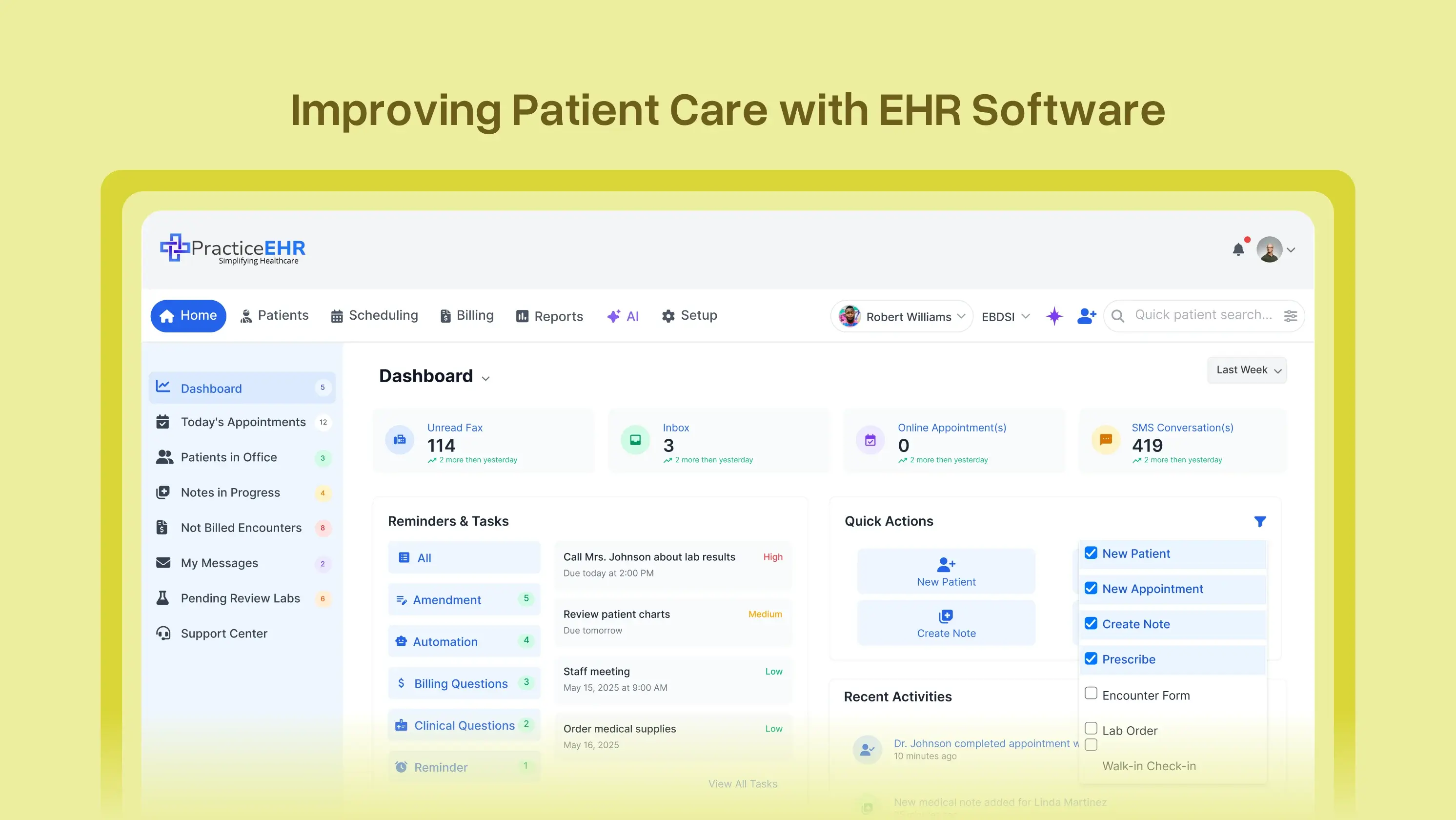
Practice EHR is a comprehensive electronic health record system tailored to the needs of behavioral health practices. Practice EHR offers convenient access to patient records, ensuring mental healthcare providers are promptly equipped to deliver optimal patient care.
Moreover, the Patient Portal and TeleVisit features promote healthy patient-practitioner interaction, leading to better outcomes.

.svg)
