
Key Takeaways
-
Best dermatology EHR improves patient care by reducing manual errors through e-prescription and CDS tools.
-
A reliable dermatology EMR system enhances practice efficiency with integrated charting, imaging, and customizable templates.
-
Dermatology EHRs also offer patient portals that boost engagement, streamline communication, and improve care outcomes.
In 2012, a tragic mistake occurred when the medical records of an 81-year-old woman were misplaced, which led to a catastrophic wrong-patient, wrong-procedure brain surgery. The intended procedure was a routine operation for her dislocated jaw. This error ultimately resulted in her death.
In dermatology, the stakes are already very high. A recent review on patient safety in dermatology showed that prescription and diagnostic errors remain significant threats to patient safety. However, these issues can be eliminated by integrating the right dermatology EMR system.
Features such as e-prescriptions and clinical decision support (CDS) tools are crucial for preventing derma-related, life-altering mistakes. In this blog, we'll explore the five common integrations offered by the leading dermatology software, including e-prescription, labs, CDS tools, charting, imaging, and customizable templates.
1. Safe and Quick E-Prescription
Modern medical practices are integrating dermatology EHR systems, which offer features like E-prescription. This feature plays a crucial role in reducing errors and improving the overall efficiency of the practice.
How Does E-Prescription Work?
Electronic prescribing allows healthcare providers to send prescription requests to pharmacies electronically. The process makes it easier for patients to receive their medications, which improves the patient experience.
According to the reports, medical errors cost healthcare systems a loss of $20 billion each year. Contrary to such concerning numbers, e-prescribing improves the prescription process through a robust EHR.
This process starts with the dermatologist selecting the appropriate medication within the EHR software, which then transmits the prescription securely to the patient’s chosen pharmacy. The pharmacy receives and processes the order almost instantly, which also reduces wait times and improves accuracy.
Why Should Dermatology EHR Systems Have an E-Prescription Feature?
In dermatology, integrating e-prescription into an EHR system is equally important. Medication errors can have severe consequences for a patient's health. It is crucial, especially when dealing with chronic skin conditions that require specific treatments.
Dermatology EHR software with e-prescription capabilities guarantees that prescriptions are accurate, reducing the risk of errors associated with manual prescriptions.
Pros of E-Prescription for Practices and Patients
For medical practices, e-prescribing reduces the administrative workload and improves efficiency. It also reduced the risk of prescription fraud, allowing dermatologists to accurately prescribe medications.
E-prescription also improves convenience for patients by eliminating the need to drop off the prescriptions physically at the pharmacy. Additionally, patients are able to take their medications over time, which contributes to their better health.
By integrating a reliable e-prescription feature, many EHR software like PracticeEHR offer a dermatology EMR system. These Dermatology EHR software offer both patients and physicians. They guarantee a safe, efficient, and seamless prescription process.
2. Clinical Decision Support (CDS) Tools
Clinical Decision Support (CDS) tools provide real-time assistance to healthcare providers, helping them make informed clinical decisions based on the latest evidence and patient-specific data.
How Do CDS Tools Work?
CDS tools are built into the EHR support system. It works by analyzing patient data and giving physicians evidence-based recommendations. It also provides reminders and alerts. For instance, when a dermatologist enters a treatment plan, CDS tools cross-check the patient’s previous medical records and suggest the best course of action.
This real-time support can prevent errors, such as prescribing a medication that might interact negatively with another drug the patient is taking.
Why Should Dermatology EHR Software Integrate CDS Tools?
Integrating CDS tools into dermatology EHR software is important because it enables physicians to have access to the most current medical records of patients. By providing timely recommendations, dermatology EMR systems can ultimately improve patient care.
Pros of CDS Tools for Practices and Patients
For medical practices, CDS tools improve practice efficiency and reduce medical errors, which leads to accurate diagnosis and patient outcomes. These tools also keep doctors updated with the latest healthcare guidelines and research.
For patients, CDS tools contribute to safer treatment plans tailored to patients’ current and most recent medical conditions. By integrating these tools into the best dermatology EHR software, it simplifies clinical processes and supports doctors to deliver the highest standard of care to their patients.
3. Comprehensive Patient Charting and Imaging Integration
By combining patient charting with advanced imaging features, dermatologists can gain a holistic view of their patients' conditions. This approach can lead to more accurate diagnoses and tailored treatment plans.’
Why Should Dermatology EHR Systems Offer Charting and Imaging Integration?
Dermatology medical practices require dermatology EMR systems that offer medical charting and imaging to effectively examine skin conditions. Dermatology EHR software handles image documentation by storing high-resolution images alongside clinical notes. This is the specialty of the best dermatology practice management software: they ensure all information is accessible in one place.
Pros of Charting for Practices and Patients
For practices, comprehensive patient charting reduces the time spent on documentation and minimizes the risk of errors. It guarantees that all patient interactions, from initial consultations to follow-up visits, are meticulously recorded. This thorough documentation is invaluable for continuity of care.
For patients, detailed charting means that their medical history is accurately captured and easily accessible, leading to more personalized and consistent care.
Pros of Imaging Integration for Practices and Patients
Imaging integration offers notable advantages for both medical practices and patients. For practices, it allows clinical documentation related to dermatology with high-resolution images of skin conditions. This feature supports diagnostic accuracy and improves clinical outcomes.
For patients, imaging integration with dermatology EMR systems means that their physicians can examine the skin conditions more accurately by providing visual evidence of concerns. It also helps the dermatologists track the progress of the treatment in a timely manner. By integrating such features, dermatology EMR systems empower dermatologists to deliver data-driven care.
4. Customizable Templates for Dermatology Procedures
With customizable templates, dermatologists can quickly document common procedures, diagnoses, and treatment plans, all while maintaining flexibility to adapt to unique patient cases.
Why Should Dermatology EHR Software Come With Customizable Templates?
The top EHR for dermatology offers customizable templates to cater to the varied and complex nature of dermatology procedures. Each patient presents unique challenges, and standardized templates may not always capture the specific details required for accurate documentation.
Customizable templates allow dermatologists to modify and tailor forms to better reflect the nuances of each procedure, guaranteeing that all relevant information is recorded efficiently. This feature saves time during patient encounters and helps maintain consistency and accuracy in clinical records.
Pros of Customizable Templates for Dermatology Practices
The benefits of customizable templates extend to both dermatology practices and their patients. For practices, these templates facilitate the documentation process by reducing the likelihood of errors and omissions while allowing for more consistent and comprehensive patient records. This efficiency frees up time for dermatologists to focus on patient care rather than paperwork.
For patients, the use of well-designed templates ensures that their medical history, treatments, and outcomes are accurately documented, leading to better-informed clinical decisions and more personalized care. By integrating customizable templates, PracticeEHR helps dermatology practices improve their workflow and provide superior patient care.
5. Advanced Patient Portal
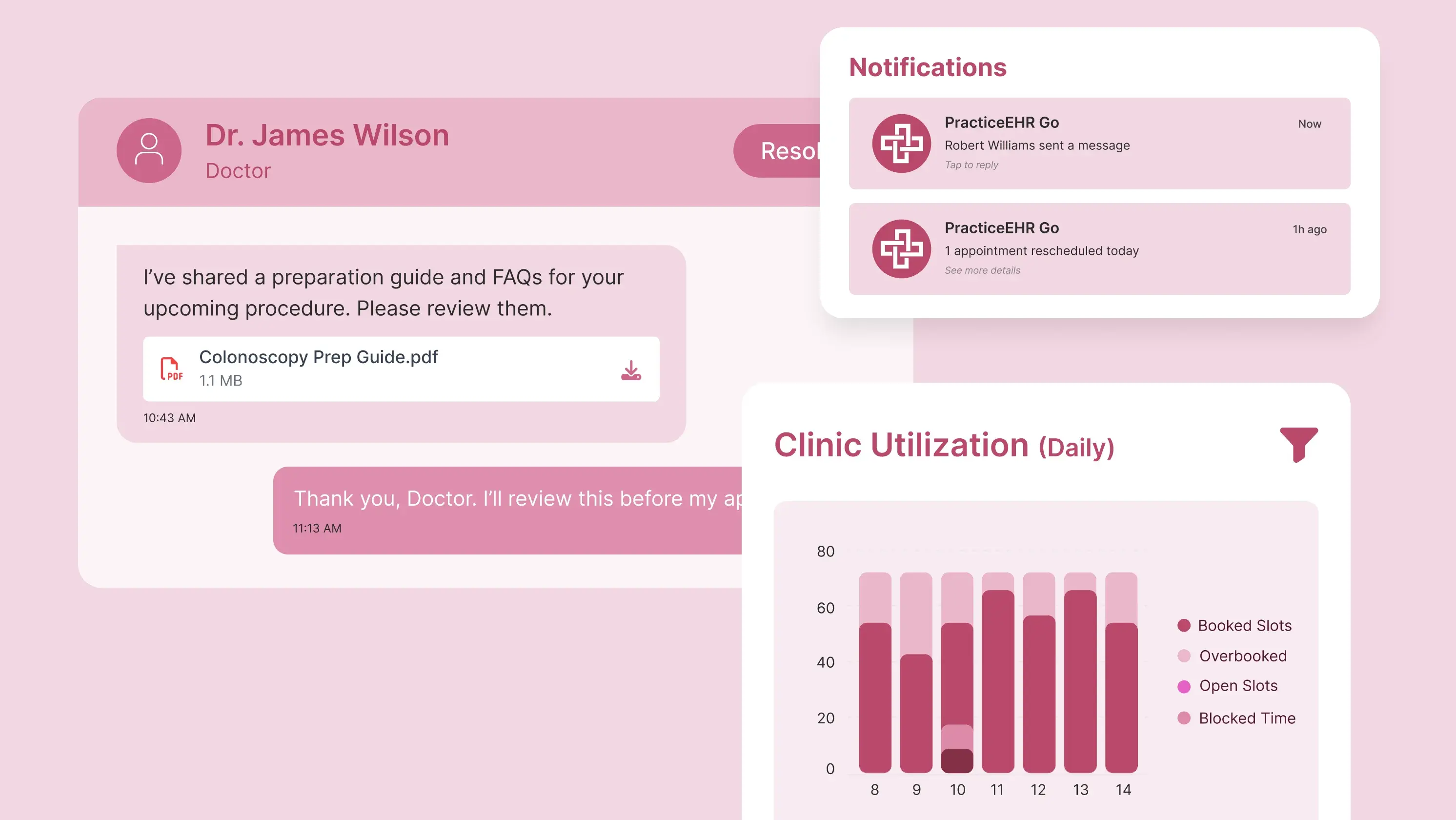
An advanced patient portal is a crucial feature in any dermatology EHR system. It gives patients direct access to their health information and facilitates better communication with their healthcare providers.
How Does a Patient Portal Work?
A patient portal is an online platform that connects patients with their healthcare providers. Through the portal, patients can access their medical records, view lab results, request prescription refills, and communicate securely with their dermatologists. The portal also allows patients to schedule appointments, complete pre-visit forms, and receive reminders, all from the convenience of their own homes.
Why Should Dermatology EHR Software Offer a Patient Portal?
Dermatology EHR software should offer a patient portal to facilitate better patient engagement and communication. Dermatology practices often require ongoing patient interaction to monitor chronic skin conditions, manage treatments, and follow up on procedures.
A patient portal simplifies these interactions by providing a centralized, secure platform for communication and information sharing. It makes sure that patients have continuous access to their dermatological care, even outside of regular office hours, which is important for maintaining treatment adherence and promptly addressing concerns.
Pros of Patient Portal for Practices and Patients
For dermatology practices, a patient portal reduces the administrative burden by automating routine tasks such as appointment scheduling, form submissions, and medication requests. This automation allows staff to focus on more complex aspects of patient care, improving overall practice efficiency.
For patients, the portal offers a convenient way to manage their healthcare, access their dermatology records, and stay in touch with their provider. This can lead to greater satisfaction and better health outcomes.
PracticeEHR - The Best Dermatology EHR Software!
When it comes to managing the unique needs of dermatology practices, having the best EHR system is important. With features like customizable templates, advanced patient portals, and seamless charting and imaging integration, PracticeEHR stands out as the best choice for dermatologists aiming to improve their practice efficiency and patient care.
Incorporating innovative tools such as clinical decision support and e-prescription features, PracticeEHR guarantees that your dermatology practice runs smoothly and effectively.

.svg)
